A series · Part 1
Growing Up in Gainesville, When It Was the Undisputed Center of Hall County (Before the Rise of Flowery Branch)
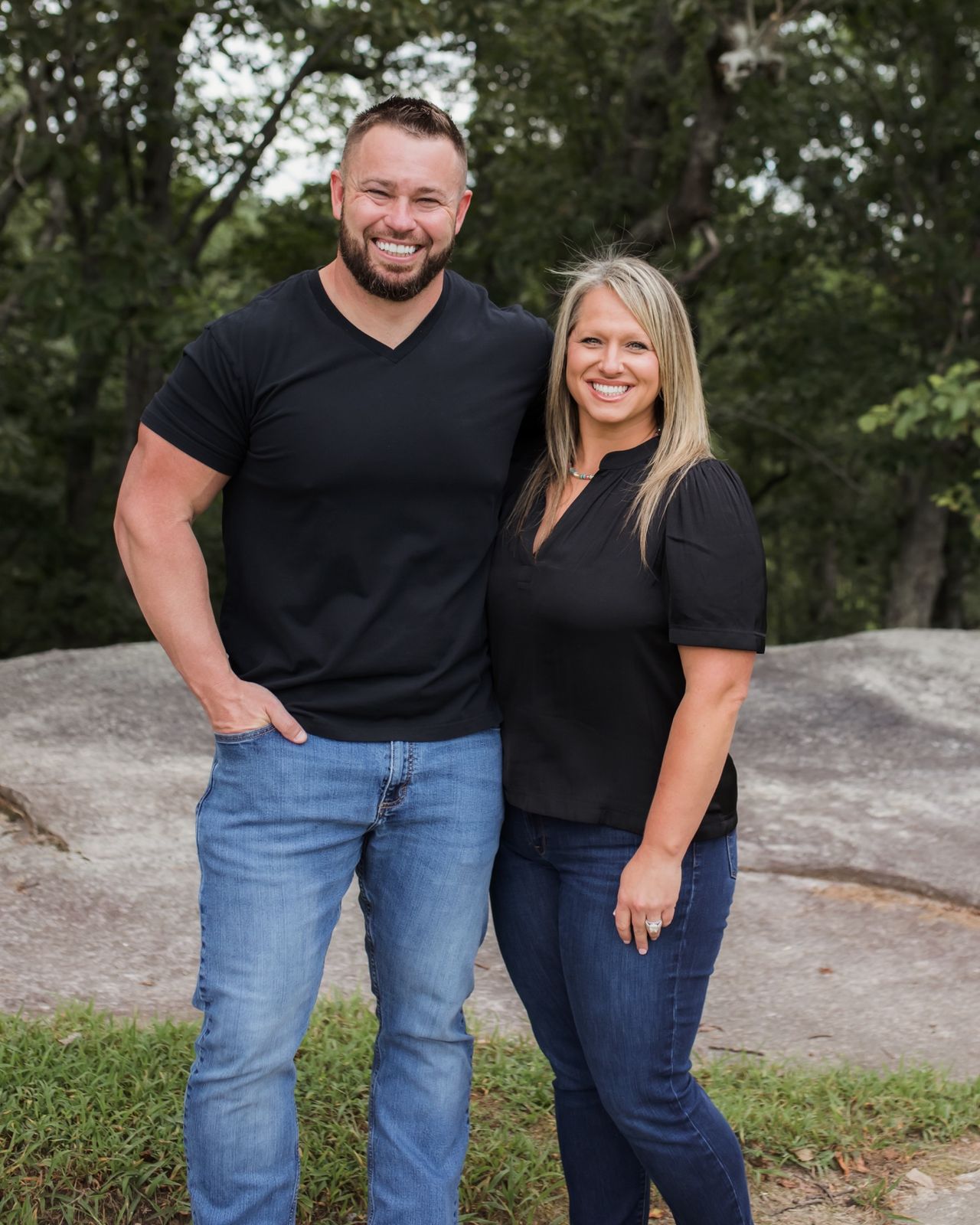
I grew up on a farm in Hall County, and for as long as I can remember, Gainesville was the center of things. If you needed a doctor, a courthouse, a decent store, or just a reason to get off the place for a few hours, you pointed the truck toward town. That was the undisputed order of the county. I don’t say that to pick a fight with anybody in Flowery Branch. I like Flowery Branch. I just still find it a little funny that a place we used to pass on the way to something else now has its own gravity, and that people from Atlanta talk about it like they’ve been in on a secret.
This is the first part of a little series I’ve been wanting to write: Growing Up in Gainesville, When It Was the Undisputed Center of Hall County (Before the Rise of Flowery Branch). I’m not a historian. I’m a guy who still lives here, who went to West Hall High School, spent a semester at Gainesville College, and has watched this county change. I’ve been reading up on the history that was always under our feet, because it helps explain the place I came from, and the place it is becoming.
Hall County itself is older than the city. The county was created in 1818. Gainesville came a few years later. Before it had that name, the settlement was known as Mule Camp Springs, a trading spot near a natural spring and the crossing of older trails. On November 30, 1821, the Georgia legislature chartered the town as the county seat and called it Gainesville, after General Edmund P. Gaines, a War of 1812 officer and surveyor. If you’ve lived here long enough, you’ve probably heard some version of that story. What sticks with me is the spring and the trails. This was already a place people passed through and traded, long before it had a courthouse square.
That square is still the heart of it, at least in my mind. The town was laid out around a courthouse square, and for a long time that was where the county came to do its business. I can remember going to town with my family, the way a farm kid does, not thinking about 1821 or city charters, just knowing that this was where things happened. You saw people you knew. You ran the errands you couldn’t run anywhere else. Gainesville wasn’t a suburb of somewhere bigger. It was the somewhere bigger, at least as far as Hall County was concerned.
The city has had to start over more than once. On June 1, 1903, a tornado tore through the south side of Gainesville and the mill community at New Holland. It lasted only a couple of minutes, and it killed nearly a hundred people. That’s a hard thing to sit with, even at a distance of more than a century. Then, on April 6, 1936, the town was hit again, this time through the commercial heart of the city. More than 200 people were killed, and many more were hurt. Downtown was left in ruins, and fires broke out in the wreckage. I can’t describe what that morning was like. I wasn’t there. But you can’t grow up in Gainesville without hearing about 1936, or seeing how the city carried it.
Gainesville rebuilt. A new courthouse and city hall were dedicated in 1938, and President Franklin D. Roosevelt came for that. There’s a reason the downtown you walk today doesn’t look like a town that was never tested. It looks like a town that had to put itself back together, and did.
The other story everybody here knows is chicken. Gainesville came to be called the Poultry Capital of the World, and a lot of that goes back to Jesse Jewell. He was a Gainesville man, born here in 1902, who took a family feed business through the Depression by a simple and durable idea. He supplied farmers with baby chicks and feed on credit, then bought the grown birds back. In the 1940s he added a hatchery and a processing plant, and later a feed mill and rendering plant, so the whole chain lived under one roof. People who study the business call that vertical integration. People who grew up around here just called it the poultry business, and you could smell it on a warm day, and you knew a lot of families who made a living in it. By the end of World War II, Gainesville already had that nickname. I grew up with it the way you grow up with a town slogan that happens to be true enough. The trucks, the houses out in the county, the jobs, the way people talked about work, it was all mixed up with birds.
If poultry gave the county a modern economy, Lake Lanier gave it a different kind of horizon. In the 1950s the U.S. Army Corps of Engineers built Buford Dam on the Chattahoochee. Construction started in 1950. The gates were closed in 1956, and the reservoir was named Lake Sidney Lanier, after the Georgia poet. The lake took a few years to fill. More than 700 families were moved so the water could come in. That part is easy to forget when you’re looking at a pretty shoreline on a Saturday, but it’s part of the story. For those of us who grew up after the lake was already here, Lanier just felt like it had always been in the county. It was where you went when the weather was good. It also tied Hall County a little more tightly to Atlanta, whether anybody was ready to admit that or not.
Gainesville has always had schools that punched above what a small city is supposed to have. Brenau was founded in 1878 as the Georgia Baptist Female Seminary, and it has been part of the town’s landscape ever since. Riverside Military Academy was founded in 1907 and opened to students in 1908, up on the hill with a view that still stops you if you’re paying attention. And then there’s the college I know more personally. Gainesville Junior College was founded in 1964, later became Gainesville College, and is now part of the University of North Georgia. I went to West Hall High School, and I spent a semester at Gainesville College. I won’t dress that up. It was a semester, and it mattered, and the campus has mattered to a lot of families in this county who needed a place close to home.
For a long time, if you left town heading south, you were leaving the center of things. That started to change when the freeway came through. The road we now call Interstate 985 was built in the 1960s as Georgia 365, a new alignment of U.S. 23, and it was designated an Interstate in 1985. I don’t remember a Hall County without that corridor, not really. What I do remember is that it used to feel like a way to get to Gainesville, or a way to get out of it. Then the exits started filling in. Oakwood. South Hall. A little more retail, a little more housing, a little more traffic than you expected to see on a Tuesday afternoon.
Flowery Branch had been a small railroad town, incorporated in 1903, twelve miles or so from the square. It had a depot, a Main Street, and a long stretch of being a quiet neighbor. Then South Hall took off. Between 2010 and 2020, Flowery Branch’s population went from about 5,700 to about 9,400, a jump of roughly 65 percent. The Falcons sealed a deal in 1999 to put a headquarters and training complex there, held their first practice in 2000, and later moved training camp to the site as well. I have to laugh a little, in a friendly way, at how quickly a place can go from “down the road” to a destination. I don’t begrudge Flowery Branch a bit of it. People need somewhere to live, and the lake and the interstate were going to pull growth sooner or later. I just reserve the right, as a Hall County farm kid who still thinks of the Gainesville square as the middle of the map, to be mildly amused when the center of gravity slides south.
None of this means Gainesville stopped being Gainesville. It’s still the county seat. It’s still where the old stories sit, from Mule Camp Springs to Jewell to the years after the tornadoes. I still live here. I still like a big truck and country music, and I still keep up with new tech. Faith and family still come first. The county is just bigger, and faster, than the one I first knew, and Flowery Branch is a large part of why.
I wanted to get this first part down because the history and the feeling belong together. There’s more I want to say about growing up here, about the farm, and about what it was like when Gainesville was, without any argument, the undisputed center of Hall County. That will keep. For now, this is the ground under the story.
Continue to Part 2.
← All posts